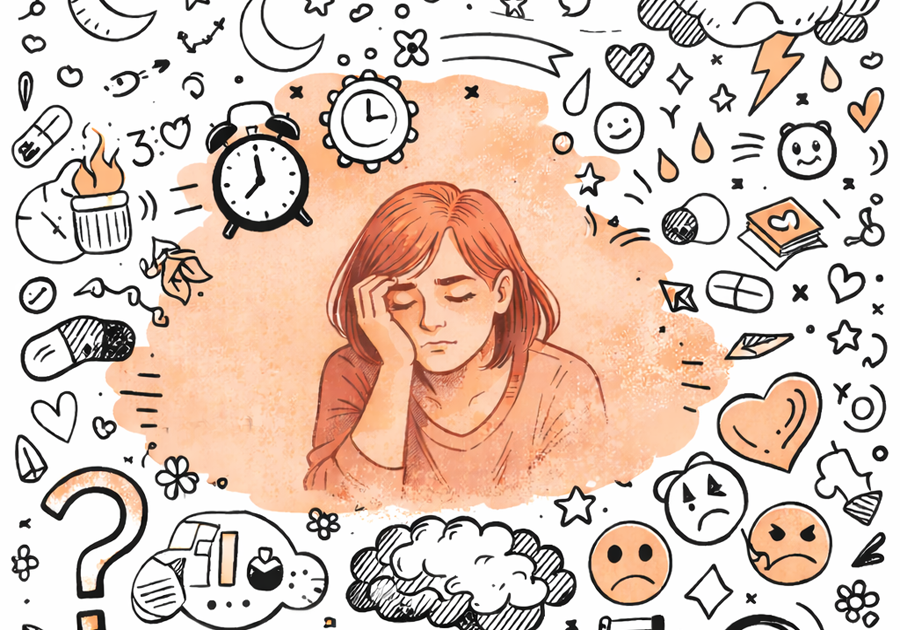
You are more tired.
More irritable.
More anxious.
Sleep feels fragile.
Your body feels unfamiliar.
And you keep wondering:
Is it stress, or is it something else?
For many women, these symptoms can overlap with the perimenopause transition.
What this season can look like
It is not just hot flashes.
It can include:
• cycle changes
• sleep disruption
• mood shifts
• brain fog
• a shorter fuse than usual
These symptoms are commonly discussed in women’s health guidance, and they can vary widely from person to person.
The hardest part
You might look fine.
So you feel like you have to prove it.
To your family.
To your coworkers.
To yourself.
You do not need to earn support by suffering louder.
3 patterns that often show up together
1) Sleep changes
Trouble falling asleep.
Waking up early.
Night sweats disrupting rest.
2) Mood changes
Mood symptoms during perimenopause are real.
ACOG notes that mood changes are common, and can feel similar to PMS for some women.
3) Body changes that feel unfair
You did not “suddenly forget discipline.”
Your body can respond differently during life transitions.
A calm plan that does not require perfection
You do not need a total life overhaul.
You need clarity and traction.
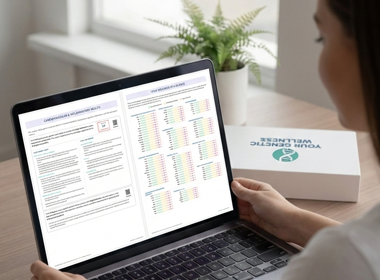
Want personalized, evidence-backed next steps for your hormones, sleep, mood, weight, and heart health?
Step 1: Track one week of reality
Pick two and track for 7 days:
• sleep quality
• mood
• cycle notes
• energy level
Patterns beat guesses.
Step 2: Choose one lever, not ten
Pick one:
• earlier caffeine cutoff
• daily gentle movement
• 10-minute wind-down routine
• cooler, darker sleep environment
Better sleep habits are a practical foundation.
Step 3: Consider a care conversation
Symptoms can also have other causes.
If symptoms are severe, persistent, or disruptive, consider discussing them with a clinician.
How to use this
• This article does not diagnose perimenopause.
• Use it to spot patterns and choose a small next step.
• Bring your notes to a clinician if you want support or evaluation.
Where genetics fits
Genetics does not diagnose this transition.
But it can help personalize a routine plan, especially around:
• stress response tendencies
• sleep sensitivity
• metabolic patterns
• nutrient processing
That turns “What is wrong with me?” into “What should I try next?”
A truth you can borrow
You are not losing it.
You are learning your body again.
And you deserve tools that respect that.
What Your Genetic Wellness is built for
We help you go from results to routines.
• practical routines you can try and track
• clearer questions for your clinician
• privacy-first controls and clear data ownership
Smarter Start. Better Nexts. Get your genetic wellness report and a clear routine to follow.